
The Architecture of Bhutanese Dzongs: Reimagining Living Heritage and Transnational Museology within the Pan-SAARC Buddhist Circuit.
Abstract
The conventional Buddhist pilgrimage circuit in South Asia is traditionally bounded by four major archaeological sites linked to the biography of the historical Buddha: Lumbini (birth), Bodh Gaya (enlightenment), Sarnath (first sermon), and Kushinagar (parinirvana) (Coningham & Ali, 2015). While these loci dominate South Asian heritage discourse, this restrictive framework marginalizes the distinct religious and cultural landscapes of the Himalayan region. This paper argues that the dzongs of Bhutan—fortress-monasteries that integrate religious, administrative, and defensive capabilities—constitute an essential yet underrepresented component of an expanded, transnational Buddhist heritage network within the South Asian Association for Regional Cooperation (SAARC) footprint.
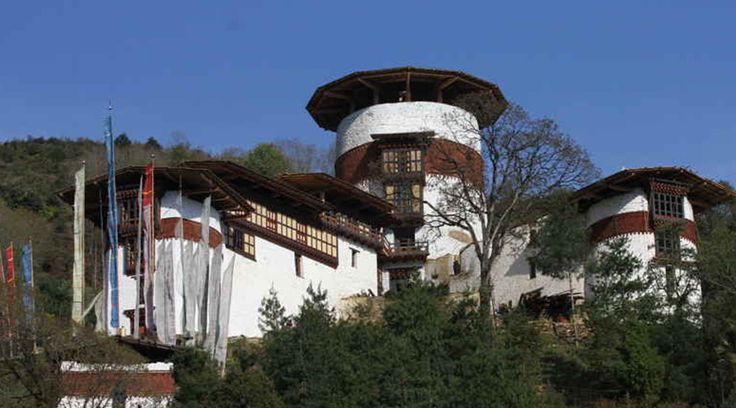
Unlike conventional monastic architectures, Bhutanese dzongs embody a unique architectural synthesis of temporal and spiritual authority. Established primarily during the seventeenth century under the leadership of Zhabdrung Ngawang Namgyal, dzongs were engineered as strategic regional strongholds and active centers of Buddhist scholarship (Aris, 1982; Phuntsho, 2013). From the earliest surviving fortress, Simtokha Dzong (1629), to the politically vital Punakha Dzong and the strategically positioned Trongsa Dzong, these complexes have fundamentally shaped Bhutan’s political and religious identity. Despite this historical weight, dzongs are rarely incorporated into regional conversations regarding South Asian pilgrimage routes or museum-based heritage interpretation.
Draft work ( Sangay Tashi, Principal Curator)