
ཀྲོང་གསར་རྫོང་གི་རྨང་གཞི།ལྷ་དང་སྲུང་མ་ཚུ།
འགྲེམས་སྟོན་༢ པ།
ཀྲོང་གསར་རྫོང་འདི་ དཔལ་ལྡན་ལྷ་མོའི་ འཆར་སྣང་ལས་བྱུང་ནུག། དེ་ཡང་ བོད་ལས་འབྲུག་ལུ་གནས་སྐོར་ལུ་བྱོན་མི་ ཡོང་འཛིན་ངག་གི་དབང་ཕྱུག་གི་ (༡༥༡༥-༡༥༥༤) ཉམས་སྣང་ལུ་ དཔལ་ལྡན་ལྷ་མོ་བྱོན་ནུག། སྤྱི་ལོ་༡༥༤༣ གྱི་ལོར་ ནུབམོ་གཅིག་ནགས་ཚལ་ནང་ བྱག་ཅིག་གི་རྩེ་གུ་ མེ་ལྷབ་ཧོནམོ་ ཅིག་འབར་སར་གཟིགས་ཏེ་ ངག་གི་དབང་ཕྱུག་གིས་ ལུང་གཤོང་དེ་ཁར་གཟིགས་པར་བྱོནམད་ མཐུ་སྟོབས་ལྡན་པའི་དཔལ་ལྡན་ལྷ་མོ་གིས་ ས་གནས་དེ་ རྩ་ཅན་ཅིག་ཨིནམ་ལས་ དེ་ཁར་ཆོས་ཀྱི་ལྟེ་བ་གལ་ཅན་ཅིག་ཆགས་ནིའི་ ལུང་བསྟན་ཡོད་ཟེར་གསུངས་ནུག། ཁོ་གིས་ས་གནས་དེ་ཁར་ལྷ་ཁང་ཅིག་ བཞེངས་གནང་མི་དེ་ ཤུལ་ལས་ཀྲོང་གསར་རྫོང་གི་རྨང་གཞི་ལུ་གྱུར་ནུག། དུས་རབས་༡༧ པ་འགོ་བཙུགས་པའི་སྐབས་ ད་རེས་ནངས་པར་གྱི་ འབྲུག་རྒྱལ་ཁབ་འདི་ ལུང་ཕྱོགས་སོ་སོ་མང་རབས་ཅིག་སྦེ་ གནས་ཏེ་སྡོད་ནུག། ཤུལ་ལས་ཞབས་དྲུང་ངག་དབང་རྣམ་རྒྱལ་གྱིས་ (༡༥༩༤-༡༦༥༡) རང་དབང་ཅན་གྱི་ལུང་ཕྱོགས་སོ་སོ་ཚུ་གེ་ར་ ཆིག་བསྒྲིལ་མཛད་དེ་ ཆོས་སྲིད་ཀྱིས་ སྐྱོང་བའི་རྒྱལ་ཁབ་གཅིག་སྦེ་ བཟོ་གནང་ནུག། ལོ་ངོ་མང་རབས་ཅིག་གི་རིང་ དམག་འཁྲུག་དང་ཉེན་འཚུབ་འབྱུང་བར་བརྟེན་ ཞབས་དྲུང་རིན་པོ་ཆེ་གིས་ རྒྱལ་ཁབ་ཀྱི་ཤར་དང་ནུབ་ཀྱི་མཚམས་ལུ་ དམག་ལས་ཀྱི་བདེ་ཐབས་ལུ་ དམག་གི་གཞི་སྒར་བཟུམ་ཅིག་སྦེ་ གལ་གནད་ཅན་གྱི་ས་གནས་ཅིག་ཨིན་མི་ ཀྲོང་གསར་ལུ་ སྲིད་སྐྱོང་གི་ལྟེ་བ་ཅིག་ གཞི་བཙུགས་གནང་ནུག། དེ་ཡང་ ཞབས་དྲུང་ཁོ་རའི་དབང་ཁྱབ་ ཤར་ཕྱོགས་ལུ་རྒྱ་བསྐྱེད་གཏང་ནིའི་འགན་ཁག་དེ་ ཐུགས་གཏད་ཧྲིལ་བུ་རུང་བའི་མོ་ངོ་ཅིག་ལུ་ གནང་ནིའི་སྲིད་བྱུས་ཨིནམ་ལས་ སྤྱི་ལོ་༡༦༤༣ ལོར་ ཁོ་ར་གིས་ཡིད་ཆེས་ཡང་དག་ཡོད་མི་ ཆོས་རྒྱལ་མི་ འགྱུར་བརྟན་པ་ལུ་ རྫོང་རྒྱ་བསྐྱེད་འབད་དགོ་བའི་ བཀའ་རྒྱ་གནངམ་དང་འབྲེལ་ཏེ་ ཀྲོང་གསར་དཔོན་སློབ་དང་པ་སྦེ བསྐོས་གནང་ནུག། ཁོ་གིས་ཞབས་དྲུང་ རིན་པོ་ཆེ་ སྐུ་ཞི་བར་གཤེགས་ཏེ་ ལོ་བཞི་གི་ཤུལ་ལུ་ སྤྱི་ལོ་༡༦༥༥ རྫོགས་མཚམས་ལས་ འབྲུག་དབུས་ཕྱོགས་དང་ ཤར་ཕྱོགས་གཉིས་དབང་ལུ་བསྡུ་ནུག།
THE FOUNDATION OF TRONGSA DZONG DEITIES AND HOLY MEN
GALLERY 2
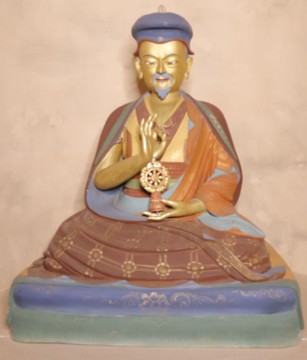
The origins of Trongsa Dzong lie in a vision of the goddess Palden Lhamo. She appeared to Ngagi Wangchuk (1517-1554) who had set out from Tibet on a pilgrimage to Bhutan. One night in 1543 he saw a blue flame hovering above a spur of rock in the forest. Drawn by this light, Ngagi Wangchuk ventured down into the valley where the powerful Palden Lhamo told him that this was a sacred place destined to become an important religious centre. With the temple he built there he laid the foundations of what was to become Trongsa Dzong. At the beginning of the 17TH century the territory of present-day Bhutan consisted of various small principalities. The establishment of a unified state was only achieved by Zhabdrung Ngawang Namgyel (1594-1651) who united the independent principalities into one theocratic state. In years of war and constant danger, the Zhabdrung established a seat of power in Trongsa, which given its strategic location between east and west, would play a crucial role as the “base camp” for military campaigns. The Zhabdrung entrusted the task of expanding his domain only to men in whom he had absolute confidence. Thus in 1643 he gave his close confidant Choegyel Mingyur Tenpa the order to expand the dzong and appointed him as the first Pönlop of Trongsa. By the end of 1655, four years after the Zhabdrung had passed away, Mingyur Tenpa had succeeded in conquering central and eastern Bhutan.