

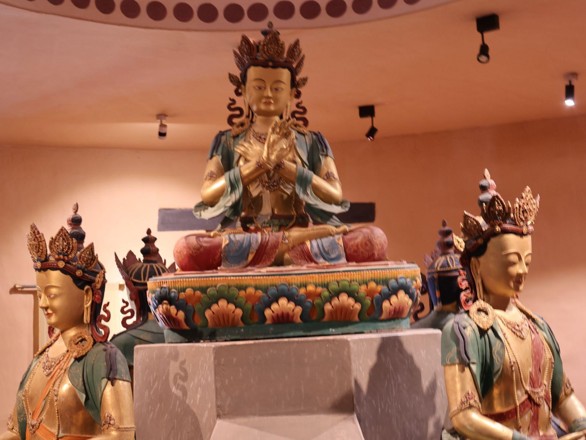
རྒྱལ་བ་རིགས་ལྔ།
འགྲེམས་སྟོན་ ༡༠ པ།
སངས་རྒྱས་ཀྱི་སྙིང་པོ་དེ་འགྲེལ་བཤད་རྐྱབ་པར་དཀའ་བའམ་ གོ་རྟོགས་ལས་འདས་པའི་ཡུལ་ཅིག་ཨིན་རུང་ ནང་པའི་ལུགས་ཀྱི་རི་མོ་ཚུ་གིས་ སངས་རྒྱས་ཀྱི་ཞིང་ཁམས་ཀྱི་འཆར་སྣང་ཚུ་བཀོདཔ་ཨིན། རྒྱལ་བ་རིགས་ལྔ་ཚུ་ འཇིག་རྟེན་འདི་ལས་འདས་པའི་བར་སྣང་གི་ཁམས་ཅིག་ནང་ བཞུགས་ཏེ་ཡོདཔ་སྦེ་བརྩིཝ་ཨིན། ཁོང་ཆ་ཁྱབ་ ཀྱིས་ མ་འོངས་པའི་ནང་པ་སངས་རྒྱས་པའི་ ཐེག་པ་ཆེན་པོའི་ཆོས་ཀྱི་ གྲུབ་མཐའི་གཞི་རྟེན་རྩ་དོན་ཚུ་གི་ རྣམ་ སྤྲུལ་སྟོནམ་མ་ཚད་ བར་སྣང་ཁམས་ཀྱི་ སངས་རྒྱས་ཀྱི་རྣམ་སྤྲུལ་ཚུ་མཚོནམ་ལས་ སྒོམ་ཉམས་ལེན་གྱི་སྐབས་ | ལུ་ དེ་ཚུ་ངོས་འཛིན་འབད་དེ་ ཁོང་གི་ཁྱད་ཆོས་ཚུ་ཉམས་སུ་བླངསམ་ཨིན་མས། ལེགས་སྦྱར་གྱི་སྐད་ནང་ ཏ་ཐཱ་ག་ཏ་ཟེར་མི་དེ་ ཆོས་སྐད་ནང་ དེ་བཞིན་གཤེགས་པ་དང་ རྫོང་ཁའི་ནང་སྦེ་བ་ཅིན་ དེ་བཟུམ་སྦེ་ལྷོད་མི་ཟེར་བའི་དོན་ཨིན་མས། དེ་ཡང་ཆོས་ཐམས་ཅད་ཀྱི་ངོ་བོ་ དེ་བཞིན་དུ་རྟོགས་མི་ཅིག་ལུ་སླབ་ ཨིན་མས། སྔོན་སངས་རྒྱས་ཀྱི་ཡང་ ཁོ་རང་གི་མཚན་ལུ་ མང་ཤོས་རང་ ཏ་ཐཱ་ག་ཏ་ཟེར་ གསུངས་སྲོལ་ཡོདཔ་ ཨིན་མས། ཁོང་ལྔ་པོ་རེ་རེ་གིས་ ཉོན་མོངས་པའི་དུག་ལྔའི་གཉེན་པོ་ འཇིག་རྟེན་ལས་འདས་པའི་ ལྷག་མཐོང་ངམ་མངོན་ རྟོགས་རེ་རེ་མཚོན་ཨིན་མས། གསང་སྔགས་ཀྱི་གྲུབ་མཐའ་དང་འཁྲིལཝ་ད་ ཉོན་མོངས་པའི་དུག་དེ་ཚུ་མ་ འཇོམས་པར་ ལྷག་པར་ནུས་ཤུགས་བསྐྱེད་དེ་ ཕན་གྲོགས་སུ་འགྱུརཝ་ཨིན་མས། དེ་ཚུ་འཁོར་བ་འདི་ནང་ ཡང་ བསྐྱར་སྐྱེ་བ་ལེན་དགོ་པའི་ རྒྱུ་མཚན་གྱི་གཉེན་པོ་ཨིནམ་ད་ དུག་ལྔ་པོ་དེ་ཡང་ འདོད་ཆགས་ ཞེ་སྡང་ གཏི་ མུག་ ངརྒྱལ་ ཕྲག་དོག་ཚུ་ཨིན་མས།
THE FIVE TATHAGATA BUDDHAS
GALLEY 10
Although the essence of the Buddha is by definition beyond conceptual understanding, Buddhist art has nonetheless developed visual expression of the enlightenment state. The five Tathagata Buddhas dwell in a sphere that is far above earthly concerns. They embody the fundamental philosophical principles of later Mahayana Buddhism and are also referred to as contemplation or “victor” Buddha’s. They denote the etheric embodiments of the Buddhahood as these can be recognized and their qualities experienced in visualising forms of meditation. The term Tathagata can be translated as “Thus-Come One’, or according to another interpretation, as “Thus -Gone One”. What is meant by these term is someone who has realised” thusness” referring to the ungraspable transcendent reality of all things. Tathagata was one of most frequently terms used historical Buddha when referring himself. Each of the Buddha represents one of the five transcendental insights, which are antidotes to five mental poisons: anger and hatred, pride, desire and greed, envy and jealously, delusion and ignorance. Accordingly to Tantric philosophy these poisons are not destroyed or suppressed, which would merely intensify their effects. Rather the poisons are transformed into positive counterparts. They are in fact the remedies against the causes of continued entanglement in the ongoing cycle of rebirth