

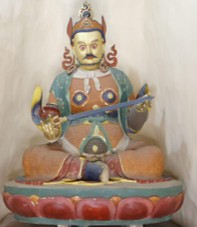
ཕྱོགས་བཞིའི་སྲུང་མ།
འགྲེམས་སྟོན་༡ པ།
རྒྱལ་ཆེན་བཞི་ཟེར་མི་ ཕྱོགས་བཞིའི་སྲུང་མ་ཚུ་ལུ་ ཕྱིའི་ཉེན་ཁ་ལས་སྲུང་ནི་དང་ རྒྱུ་ནོར་ལོངས་སྤྱོད་ཀྱི་དངོས་གྲུབ་ཞུ་ནིའི་དོན་ལུ་ གསོལ་བ་བཏབ་སྲོལ་ཡོདཔ་ཨིན། ཁོང་གིས་རྫོང་གཞིས་ཁག་དང་ ལྷ་ཁང་དགོན་སྡེ་ཚུ་གི་སྒོ་ར་ལས་ སྲུང་སྐྱོབ་མཛད་དེ་ ཕྱོགས་ བཞིའི་མི་མཐུན་པའི་རྐྱེན་ངན་ཚུ་ཟློགཔ་ཨིན། ཁོང་གི་མཚན་ཡང་ ཕྱོགས་བཞིའི་མིང་ལུ་རྒྱལ་པོ་སྦྱར་ཏེ་ ཤར་ཕྱོགས་རྒྱལཔོ་ ལྷོ་ཕྱོགས་ རྒྱལཔོ་ ནུབ་ཕྱོགས་རྒྱལཔོ་ བྱང་ཕྱོགས་རྒྱལཔོ་ཟེར་ཞུཝ་ཨིན། ཁོང་གི་མཚན་ལུ་རྒྱལཔོ་ཟེར་ཞུ་མི་དེ་གིས་ ནང་པའི་ཡིད་ཆེས་ནང་ལུ་ ཁོང་ལུ་དད་པ་དང་མོས་གུས་ ག་དེ་སྦེ་ཡོདཔ་ཨིན་ན་ དྲན་གསོ་འབདཝ་ཨིན་མས། རྒྱལ་ཆེན་བཞིཔོ་ ཆ་མཉམ་རང་ རྒྱ་གར་གྱི་འདོད་ ལུགས་ལས་བྱུང་ཡོད་མི་དེ་ཡང་ སངས་རྒྱས་ཤཱཀྱ་མུ་ནི་ ཆོས་གནང་པའི་ལོ་རྒྱུས་གོ་སྟེ་ ཁོང་ཆ་ཁྱབ་ཡང་ སློབ་མ་ཚུ་གི་གྲངས་སུ་ འཛུལ་ནུག། དེ་ལས་སངས་རྒྱས་ཀྱིས་ ཁོང་ཆ་ཁྱབ་སངས་རྒྱས་ཀྱི་མཐའ་བསྐོར་ཏེ་སྡོད་པའི་ ས་ཕྱོགས་དང་འཁྲིལ་ཏེ་ ཕྱོགས་སོ་སོའི་ སྲུང་མ་སྦེ་ བསྐོས་གནང་ནུག། དུས་དེ་ལས་ཚུར་ འགྲོ་བ་མི་དང་སངས་རྒྱས་ཀྱི་བསྟན་པ་ གནོད་པའི་དགྲ་བོ་གདུག་ཅན་ཚུ་ལས་ སྲུང སྐྱོབ་མཛད་བཞིན་དུ་ཡོདཔ་ཨིན་མས། ཁོང་གིས་རིའི་རྒྱལ་པོ་རི་རབ་ལུ་བཞུགས་ཏེ་ ང་བཅས་ལུ་སྐྱབས་མགོན་མཛདཔ་ཨིན་མས། ཁོང་གིས་སྲུང་སྐྱོབ་མཛད་པའི་བརྡ་མཚོན་ལུ་ དབུས་ཨེ་ཤི་ཡའི་དམག་ཆས་ ཀོ་བའི་གོ་ཁྲབ་མཐུག་པོ་བཞེས་ཏེ་ཡོདཔ་ཨིན། ཨིན་རུང་ གཅིག་གིས་དཔའ་རྟགས་འཆང་སྟེ་ཡོདཔ་མ་གཏོགས་ གཞན་ཚུ་གི་ཕྱག་ལུ་ ཞི་བའི་ཁྱད་ཆོས་ཚུ་བསྣམས་ཏེ་ཡོད།
GUARDIANS OF THE FOUR QUARTERS
GALLERY 1
The mythological Guardians of the Four Quarters are invoked as protectors from outward dangers and prayed to for material riches. They frequently protect the entrances to monasteries and temples and ward off evil influences from all four directions. The guardians are called the Kings of the North, South, West and East. The designation of “king” relates to the legend of how the guardians were taken into the Buddhist pantheon. Upon hearing Buddha Shakyamuni preaching his sermons they joined as his followers. The Buddha then made each one the protector of the cardinal point at which they were sitting in the circle around him. Since that time they have protected the world from malevolent demons that threaten humankind and Buddhist teachings. They reside on Meru, the Holy Mountain, from where they protect us. As a sign of their readiness to defend they are represented wearing heavy leather armour reminiscent of Central Asian warriors, however, with the exception of one who wields a sword, they hold pacific attributes in their hands.